 APSR2026 logo - v07_final_357389.png)

Michelle Gong United States
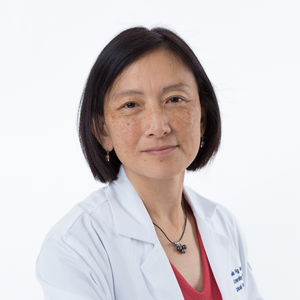
Dr. Gong is the President of the American Thoracic Society and Professor in Medicine and Chair of the Department of Medicine at Montefiore Medical Center and Albert Einstein College of Medicine. She was formerly the Chief of Critical Care Medicine, Chief of Pulmonary Medicine, and Director of Critical Care Research at Montefiore Einstein. After receiving an engineering degree at the University of Pennsylvania, Dr. Gong went on to earn a medical degree at the Yale University School of Medicine. She then completed her postdoctoral training at the Beth Israel Hospital in medicine and at the Brigham and Women’s Hospital in the Harvard Combined Program in Pulmonary and Critical Care Medicine. She also studied at the Harvard School of Public Health, receiving her Master’s degree in Clinical Epidemiology. Prior to coming to Albert Einstein College of Medicine and Montefiore Medical Center, she was Assistant Professor of Medicine in the division of Pulmonary, Critical Care and Sleep Medicine at the Mount Sinai School of Medicine. She joined the Einstein/Montefiore faculty in July 2009.
Dr. Gong is recognized nationally and internationally for her expertise in critical care delivery and management of acute respiratory failure and acute respiratory distress syndrome (ARDS). She has spent her career on improving outcomes in patients along the entire continuum of critical illness from its development to its progression and recovery with an overall focus on the prediction and prevention of acute organ failure and their complications. Nationally, she is a well-respected clinical researcher and trialist in acute injury and critical illness. Continuously funded by the NIH for over 30 years for her work, her research ranges from COVID-19 and ARDS to prevention of delirium, treatment of severe influenza, big data and predictive analytics in risk prediction, and effective clinical decision support systems. Her research has been published in the New England Journal of Medicine and JAMA. She has also been funded by the AHRQ on clinical decision making in ARDS and by the NHLBI for the Montefiore-Sinai Clinical Center for the PETAL Clinical Trials Network focused on the prevention and early treatment of ARDS. She is the current Chair of the Steering Committee for the NIH funded ARDS, Pneumonia, Sepsis Consortium.
A model clinician-researcher, her scientific projects influence her clinical care, and her patients motivates her research. So it is not surprising that some of her proudest achievements have occurred within her clinical work to improve outcomes for patients within Montefiore. This has included process improvement projects such as the implementation of sedation and delirium protocols and early mobilization in the medical intensive care unit that has reduced duration of mechanical ventilation, length of stay, hospital costs and ICU complications. She has also worked on the incorporation of artificial intelligence to help identify patients at increased risk of poor outcomes at Montefiore and evaluation of clinical decision support systems. She has co-authored the Surviving Sepsis Guidelines on management of patients with COVID-19, published in Intensive Care Medicine.
Dr. Gong is a well-regarded leader in the field of pulmonary and critical care medicine. She is a graduate of the prestigious Executive Leadership in Academic Medicine Fellowship and was the former or current chair of the Critical Care Planning Committee and the Critical Care Assembly for the American Thoracic Society. Dr. Gong was awarded the Gotham Icon Award for Champions and Change Makers of New York City by the Museum of the City of New York in 2020 and the NHLBI Director Award in 2024. Most recently, she was awarded the 2026 Team Science Award from the Association of Clinical and Translational Science (ACTS). Given her expertise, she has been named to multiple panels to develop clinical practice guidelines on ARDS, COVID-19, and acute respiratory failure for the American College of Chest Physicians, the American Thoracic Society , the Surviving Sepsis Campaign and European Society of Intensive Care Medicine. In these leadership positions, she has had the fortune and privilege to mentor residents, fellows and junior investigators both within and beyond Montefiore into productive, academic careers in medicine.
Job Title
President
Faculty / Department / Division
Medicine
Institution / Organisation
American Thoracic Society
20 November 2026, Friday
| Time | Session |
|---|---|
|
14:00
15:00
|
Ballroom 4, Lower Ground Floor
|
22 November 2026, Sunday
| Time | Session |
|---|---|
|
08:30
09:00
|
The Future of Respiratory and Critical Care: Scaling The 4P Approach To Clinical Trials
The 4P approach in medicine includes prevention, prediction, personalization and patient participation. This 4P approach is already being scaled to critical care clinical trials. Prevention for critical illness exist at different levels across the continuum of critical illness The new global ARDS definition, which now permits earlier enrolment of non-intubated patients allows for trials aimed at prevention of intubation and indeed, recent "positive" trials have consequently enrolled hospitalized patients before mechanical ventilation. Because most patients never develop the disease, prevention demands prediction which serves as enrichment strategies in clinical trials to identify patients for trial enrollment. Two enrichment strategies include prognostic enrichment (selecting for higher event rates, e.g. severe ARDS with PaO₂/FiO₂ < 150 mmHg) and predictive enrichment (selecting patients more likely to respond biologically). Predictive enrichment also leads to precision medicine which is already occurring in ARDS trials. The final 4P is patient participation, covering patient-reported outcomes in post-intensive care syndrome and equity in enrollment into clinical trial participation.
Ballroom 3, Lower Ground Floor
|