 APSR2026 logo - v07_final_357389.png)

Yuh-Min Chen
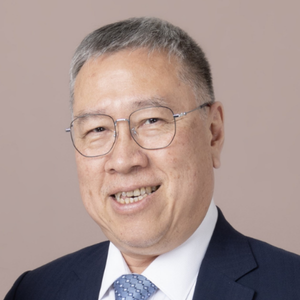
Medical School
1978–1985 National Yang-Ming Medical College
1983–1985 Intern, Taipei Veterans General Hospital
Postgraduate Training
- 1987–1989 Resident, Medical Department, Uan-Chyan Veterans Hospital, Taiwan
- 1989–1992 Resident, Chest Department, Taipei Veterans General Hospital
- 1992–1993 Chief Resident, Chest Department, Taipei Veterans General Hospital
- 1993–1994 Fellow, Chest Department, Taipei Veterans General Hospital
- 1993–1995 Fellow, Cancer Clinical Research Center, Institute of Biomedical Sciences, Academia Sinica
- 1996–1997 Visiting Fellow, National Cancer Institute, National Institutes of Health, USA
- 1994–1998 Ph.D., Institute of Clinical Medicine, National Yang-Ming University
Academic Appointment
- 1991–present Board certified, Internal Medicine
- 1992–1997 Clinical Lecturer, Medical Department, National Yang-Ming University
- 1993–present Board certified, Chest Medicine
- 1994–2026 Attending Physician, Department of Chest Medicine, Taipei Veterans General Hospital
- 1995–present Board certified, Medical Oncology
- 1997–1999 Clinical Assistant Professor, School of Medicine, National Yang-Ming University
- 2004–2012 Clinical Associate Professor, School of Medicine, National Defense University
- 1998–2008 Adjunct Attending Physician, Institute of Cancer Research, National Health Research Institutes
- 1999–2002 Assistant Professor, School of Medicine, National Yang-Ming University
- 2002–2013 Associate Professor, School of Medicine, National Yang-Ming University
- 2008/8–2013 Clinical Professor, Taipei Medical University
- 2013–2022 Professor, College of Medical Science and Technology, Taipei Medical University
- 2015/9/1–2020/1/15 Chief, Division of General Chest Medicine, Department of Chest Medicine, Taipei Veterans General Hospital, Taipei
- 2016–2026 Chairman, Thoracic Oncology Multidisciplinary Team, Taipei Veterans General Hospital, Taipei
- 2016/2/1–present Professor, School of Medicine, College of Medicine, National Yang Ming Chiao Tung University, Taipei
- 2020/01/16–2026/01/15 Head, Department of Chest Medicine, Taipei Veterans General Hospital, Taipei
- 2026/3/2– Head, Clinical Research Center, Shin Kong Wu Ho-Su Memorial Hospital, Taipei
Professional Interests and Specialties
- Internal Medicine
- Pulmonary and Critical Care Medicine
- Medical Oncology, especially Thoracic Oncology
- Cell Biology and Molecular Biology
- Tumor Immunology
- Chemotherapy
- Targeted Therapy
- Immunotherapy
Professional Societies
- Member, European Society of Clinical Oncology
- Member, American Society of Clinical Oncology
- Member, International Association for the Study of Lung Cancer
- Member, Asia-Pacific Society of Respirology Research Committee, 2020–present
- Fellow, American College of Chest Physicians
- Member, Society of Internal Medicine (Taiwan)
- Member, Society of Ultrasound in Medicine (ROC)
- Member, Taiwan Clinical Oncology Society
- Member, Taiwan Cancer Society
- Member, Taiwan Society of Respiratory and Intensive Care Medicine
- Member, Chinese Medical Association (Taipei)
- Member, Taiwan Lung Cancer Society
- Member, Asia-Pacific Society of Respirology
- Member, European Respiratory Society
- Secretary, Taiwan Clinical Oncology Society, 1994–2001
- Secretary General, Taiwan Lung Cancer Society, 2000–2008, 2009–2012
- Secretary General, Taiwan Clinical Oncology Society, 2001–2007
- Secretary General, 15th Taiwan Jointed Cancer Conference, May 2018, Taipei, Taiwan
- President, Taiwan Clinical Oncology Society, 2007–2013
- Audit, Taiwan Society of Palliative Medicine, 2008–2010
- Director, Chinese Oncology Society, 2011–2013
- Director, Taiwan Clinical Oncology Society, 2013–present
- Member of Scientific Committee, 12th, 13th, and 14th World Conference on Lung Cancer, IASLC, 2007, 2009, 2011
- Section Chair, 13th and 14th World Conference on Lung Cancer, IASLC, 2009 and 2011
- Co-Chair, Organizing Committee, Taiwan Joint Cancer Conference, 2000–2013, 2016, 2017, 2019, 2020
- Chair, Organizing Committee, Annual Meeting of Cross-Strait Academic Conference on Oncology, 2007–2014
- Vice-Chair, Organizing Committee, bi-annual meeting of Chinese Anti-Cancer Society, 2007–2013
- Organizing Committee, Round Asia Oncology Forum (RAOF) 2012, Taipei, Taiwan, 2012/8/31–2012/9/2
- Committee member, Avastin global advisory board meeting, 15th World Conference on Lung Cancer (WCLC 2013), Sydney, Australia, October 31, 2013
- Chair, Iressa Asia area advisory board meeting, Taipei, Taiwan, March 8, 2014
- President, Taiwan Lung Cancer Society, 2015/05/08 – 2021/08/26
- Chair, TLCS and IASLC Lung Cancer Symposium, October 28–29, 2017, Taipei, Taiwan
- Chair, 23rd Taiwan Jointed Cancer Conference, May 5–6, 2018, Taipei, Taiwan
- Committee member, 2nd Expanded Asia NSCLC Adboard Meeting for Afatinib, Taipei, Taiwan, October 6, 2018
- Chair, 2020 Taiwan Lung Cancer Society International Symposium on Treatment Advances in Lung Cancer, Taipei, January 1–12, 2020
- Councillor, Asia-Pacific Society of Respirology, 2024/Aug – present
- President, The 9th Asia-Pacific Region Conference of the International Union Against Tuberculosis and Lung Disease and the 2024 Summer Meeting of the Taiwan Society of Pulmonary and Critical Care Medicine, 2024/4/26–2024/4/29, Taipei, Taiwan
- President, The 10th Asian Pacific Congress on Bronchology and Interventional Pulmonology and the 2025 Summer Meeting of the Taiwan Society of Pulmonary and Critical Care Medicine, 2025/6/20–2025/6/22, Taipei, Taiwan
- President, Taiwan Society of Pulmonary and Critical Care Medicine, 2023/12/14 – present
- Secretary General, Asian Pacific Society of Respirology, 2025 Dec –
Job Title
Head
Faculty / Department / Division
Department of Clinical Research Center
Institution / Organisation
Shin Kong Wu Ho-Su Memorial Hospital
20 November 2026, Friday
| Time | Session |
|---|---|
|
11:00
12:00
|
Ballroom 3, Lower Ground Floor
|