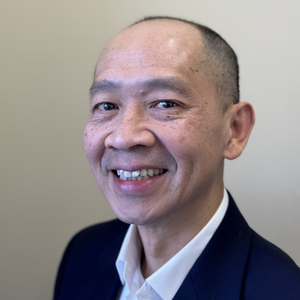
Kwun Fong Australia

Thoracic and sleep physician and clinical manager of the Pulmonary Malignancy Unit at The Prince Charles Hospital, and Professor of Medicine at the University of Queensland. His research interests are focussed on improving outcomes and the health of people who are affected by lung disease.
Job Title
Thoracic and Sleep Physician
Faculty / Department / Division
Thoracic Medicine
Institution / Organisation
The Prince Charles Hospital University of Queensland and University of Queensland

21 November 2026, Saturday

Time Session
09:30
10:30
Noni Novisari Soeroso Chairperson Indonesia
Tracy Leong Chairperson Australia
  • Kwun Fong Speaker Australia
    Omics (Genomics, Proteomics, and Multi-Omics) “omics” refers to the large-scale study of biological molecules in a tumor, including its DNA (genomics), RNA (transcriptomics), and proteins (proteomics). Omics can be considered essential in lung cancer for several reasons: • Precision Medicine and Targeted Therapy. Lung cancer is driven by diverse genetic mutations. Genomic profiling allows doctors to identify specific driver mutations (such as EGFR, ALK, ROS1, or BRAF) and match patients to targeted drugs as their effectiveness is dependent on the present of mutations. • Biomarker Discovery. Integrating multiple layers of omics data (multi-omics) can discover new biomarkers that predict how the behaviour of a lung cancer. • Overcoming Drug Resistance. Lung cancers can adapt and becomes resistant to treatment. Omics technologies can reveal how cancer cells adapt and change, thus revealing potential new actionable pathways.
  • Yoshinori Hasegawa Speaker Japan
    Cancer research possesses a long and rich history. Early landmark studies demonstrated chemical carcinogenesis induced by coal tar, establishing the foundational principle that external stimuli and chronic inflammation serve as crucial drivers of malignant transformation. Concurrently, extensive molecular investigations have elucidated that cancer development is a dynamic, multistep process governed by the sequential accumulation of somatic genetic mutations. Understanding how environmental triggers interact with intrinsic genomic landscapes remains largely unknown in modern oncology. In this symposium, we discuss the roles of host genetic susceptibility alongside environmental carcinogens—particularly ambient air pollution—in driving carcinogenesis, using epidermal growth factor receptor (EGFR) gene mutations as a prime biological model. Although numerous epidemiological studies have well documented a significantly higher prevalence of EGFR-mutant lung cancers among Asian populations, this distribution cannot be attributed to a single etiology. Instead, it is increasingly evident that a complex interplay of multiple genetic and environmental determinants underlies this phenomenon. To conceptualize these intricate interactions, we propose the "Host–Pollution–Driven Tumour Promotion" hypothesis as a working model. In this framework, germline host factors and exogenous exposures converge on altered immune surveillance and macrophage-driven inflammation to create a tumour-promoting context (Sunaga et al., Respirology,2026). By integrating host genomic predispositions with extrinsic environmental factors, this model provides a comprehensive mechanistic perspective on how non-mutagenic environmental pollutants can synergize with pre-existing genetic risks to facilitate tumor initiation and progression. Ultimately, exploring this paradigm deepens our understanding of multi-factorial carcinogenesis and highlights potential avenues for targeted prevention and early therapeutic intervention.
  • Henry Marshall Speaker Australia
  • Q&A
Ballroom 3, Lower Ground Floor

22 November 2026, Sunday