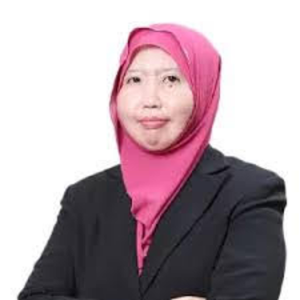
Dg Zuraini Sahadan Malaysia

Name: Dr Dayang Zuraini binti Sahadan Designation: Consultant Paediatric Respiratory Physician Qualifications: M.D (USM), MMed(Paediatric) USM Paediatric Respiratory Fellowship Monash Medical Centre RPSGT, CCSH, WSS Current Position: 1) Head of Paediatric Respiratory Unit Hospital Sultan Idris Shah, Serdang 2) Visiting Paediatric Respiratory Physician Prince Court Medical Centre Interest : Childhood Asthma and allergy, paediatric sleep medicine, non-invasive ventilation, paediatric airway and interventional pulmonology
Job Title
Consultant Paediatrician and Paediatric Respiratory Physician
Faculty / Department / Division
Paediatric
Institution / Organisation
Hospital Sultan Idris Shah

19 November 2026, Thursday

Time Session
08:30
13:00
Arvindran Alaga Chairperson Malaysia
Dg Zuraini Sahadan Chairperson Malaysia
Zheyi Liew Chairperson Malaysia
Function Room 5 & 6, Ground Mezzanine Floor
14:30
16:30

22 November 2026, Sunday

Time Session
09:00
10:30
Rus Anida Awang Chairperson Malaysia
  • Kate Chan Speaker Hong Kong
  • Naricha Chirakalwasan Speaker Thailand
  • Albert M. Li Speaker Hong Kong
    Childhood obstructive sleep apnoea (OSA) is a common condition linked to a range of complications, including neurocognitive and behavioural impairments, reduced quality of life, and elevated metabolic and cardiovascular risks. Adenotonsillectomy (AT) remains the first-line treatment, offering proven benefits across these domains. Timely diagnosis is therefore essential for early intervention and improved outcomes. Polysomnography (PSG) is the gold standard for diagnosing OSA. However, limited access leads to longer waiting periods. Moreover, the requirement for an overnight hospital stay can be particularly challenging for children. Given current limitations, there is a pressing need for a validated, user-friendly diagnostic tool to enable early and accurate identification of paediatric OSA. Recent research has shifted focus toward nocturnal hypoxaemia. A novel metric, the hypoxic burden (HB), first introduced by Azarbarzin et al., has shown superior predictive value for cardiovascular mortality than the apnoea-hypopnoea index (AHI) in adults. Despite its promise, HB has been criticised for its computational complexity. A more streamlined and accurate alternative, the oxygen desaturation burden index (OBI), has since emerged. This severity metric accounts for both the depth and duration of oxygen desaturations without requiring respiratory event scoring. Importantly, OBI can be derived from simple overnight oximetry, making it a more accessible and cost-effective option for home-based assessments. In this presentation, the speaker will discuss the usefulness of OBI and his research on using this parameter in interventional studies and in assessing cardiovascular complications in children with OSA.
  • Dg Zuraini Sahadan Speaker Malaysia
    From Lab to Wrist: The Emerging Role of Wearables in Paediatric Sleep Medicine Overnight in-laboratory polysomnography (PSG) has long been the gold standard for diagnosing paediatric sleep-disordered breathing. However, long waiting lists, high costs, and the distress of overnight hospital stays for young children have limited patient access. Recent landmark validation studies highlight that specialized paediatric-trained deep learning algorithms—specifically dual-stream local-global Long Short-Term Memory (LSTM) networks which can process raw wrist movement and heart rate signals to achieve 95% ROC-AUC accuracy in classifying sleep and wakefulness. Unlike traditional adult models or older mathematical scoring methods, these paediatric AI classifiers eliminate proportional bias and estimate total sleep duration within minutes of laboratory gold standards. Furthermore, systematic evidence across 62 portable sleep monitoring trials reveals that multi-channel home polygraphy and AI-assisted pulse oximetry offer specificities up to 100% for ruling in severe paediatric Obstructive Sleep Apnea (OSA). This allows clinicians to fast-track children with adenotonsillar hypertrophy for urgent surgical adenotonsillectomy without unnecessary laboratory delays. By combining wrist movement sensors with optical heart rate tracking and paediatric deep learning, we can evaluate children over multiple nights in their natural home environment. This transition from lab to wrist bridges the gap between cutting-edge technology and accessible child healthcare.
  • Q&A
Ballroom 2, Lower Ground Floor