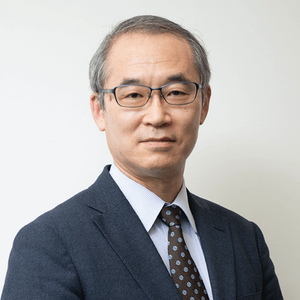
Arata Azuma

Arata Azuma

Title: Professor Emeritus

Citizenship: Japanese

Education

  • 1983: Graduated from Nippon Medical School
  • 1983-88: Resident (Pulmonary medicine, Clinical oncology)
  • 1989-91: Research work (Department of Immunology, Juntendo University)
  • 1991: MD, PhD, Nippon Medical School, Tokyo, Japan

Academic Career

  • 1994 – present: Secretary General of the ‘Research Group on Novel Effects of Macrolides’
  • 1996: Assistant Professor of Pulmonary Medicine, Nippon Medical School
  • 1999 – present: Member of a research group of the Ministry of Health, Welfare and Labor(MHWL) of JAPAN (Research on Pathogenesis of Diffuse Parenchymal Lung Diseases)
  • 2002 – present: Member of a research group of the Ministry of Health, Welfare and Labor of JAPAN (Strategy for Clinical Research on Treatment of Idiopathic Interstitial Pneumonias)
  • April 2002 – present: Member of the International Committee Meeting of the Japanese Respiratory Society
  • 2004: Associate professor of Pulmonary medicine, Nippon medical School
  • 2008: Visiting Professor of Tongji University, School of Medicien (Shanghai)
  • 2008.10: Professor of Graduate School of Medicine, Department of Pulmonary, Infection and Oncology in Nippon Medical School
  • 2010 to 2012: National Delegate of ERS-Japan
  • 2010. 4: Director of Asian Pacific Thoracic Academy (APTA)
  • 2011. 1: WASOG vice president
  • 2011. 3: Global Steering Committee member for INPULSIS trial
  • 2011. 6: PMDA committee member for survey of adverse drug reaction
  • 2013. 4: Visiting Professor of National University of Mie
  • 2013. 4: Associate Editor of Respirology Case Reports Journal
  • 2013. 12: Part-time Assistant Professor of National University of Kyoto
  • 2016. 4: Research Associate of National University of Mie
  • 2016. 5: Visiting Professor of Nevada University
  • 2017.10-2020.10: President of WASOG
  • 2018.10: Education Committee Chair of APSR
  • 2019.10: Conference Chair of WASOG/JSSOG in Japan
  • 2023.4: Chair of Respiratory Medicine and Clinical Research Center, Mihara General Hospital
  • 2023.9: President of JSSOG
  • Awards, Honors and Foundation officer

  • July 2000: Research on Pulmonary Fibrosis Award (Okamoto Award)
  • August 2002: Award for Research on Diffuse Lung Diseases (from Nippon Medical School)
  • 2016. 6: Auditor of Japanese Respiratory Foundation
  • 2019.11: Harasawa Memorial Award of APSR
  • 2023. 9: President of JSSOG
Job Title
Director of Respiratory Medicine and Clinical Research Center
Faculty / Department / Division
Clinical Research Center
Institution / Organisation
Mihara General Hospital

21 November 2026, Saturday

Time Session
14:00
15:30
Hsing-Chen Tsai Chairperson Taiwan
  • Arata Azuma Speaker Japan
  • Namkoong Ho Speaker Japan
    "Understanding host genetic susceptibility is crucial for unraveling the pathogenesis of infectious pulmonary diseases and developing personalized clinical strategies. In the first part of this presentation, we focus on severe COVID-19. Through a genome-wide association study (GWAS) in a Japanese cohort, we identified a risk variant at 5q35 (rs60200309-A) near DOCK2, which is associated with severe COVID-19 in patients under 65 years of age. Single-cell RNA sequencing and functional analyses revealed cell-type-specific downregulation of DOCK2 in non-classical monocytes, leading to impaired macrophage recruitment and dysregulated type I interferon responses. Importantly, this risk allele is prevalent in East Asians but rare in Europeans, underscoring the critical need for genetic studies in non-European populations(Namkoong, et al. Nature 2022.). In the second part, we transition to nontuberculous mycobacterial pulmonary disease (NTM-PD). By expanding our genomic investigation to multinational cohorts across Korea, Japan, and Europe, we identified and validated three susceptibility loci (IL1Rs, PDE8B, and PRKCB). Furthermore, Mendelian randomization analysis demonstrated a significant negative causal relationship between body mass index (BMI) and NTM-PD susceptibility(Park, et al. Am J Respir Crit Care Med . 2025). Together, these findings highlight that establishing multinational and multi-ethnic cohorts is indispensable for precision respirology, as it allows us to uncover both population-specific risk variants and globally conserved host mechanisms in respiratory infections."
  • Koji Sakamoto Speaker Japan
    Acute lung injury (ALI), including acute respiratory distress syndrome (ARDS), is a life-threatening syndrome triggered by systemic insults such as infection or trauma. It is characterized by intense pulmonary inflammation and increased vascular permeability that disrupt gas exchange. Despite decades of investigation, therapeutic strategies targeting aberrantly activated inflammatory cells, including corticosteroids, have produced inconsistent clinical benefits, underscoring the need for new mechanistic insights and therapeutic targets. Recent advances in innate immunology have begun to reveal pathways that regulate the dysregulated activation of phagocytes such as neutrophils and macrophages, highlighting previously unrecognized drivers of inflammatory tissue injury. In this lecture, I will discuss emerging mechanisms that amplify lung inflammation, with particular emphasis on inflammatory feedback loops between neutrophils and macrophages and on DNA-triggered inflammatory signaling pathways as potential drivers of organ injury, integrating insights from our recent studies.
  • Q&A
Ballroom 1, Lower Ground Floor