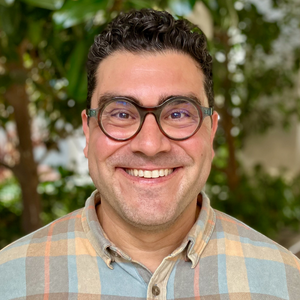
Diego Silva Australia

Dr. Diego Silva is an Associate Professor of Bioethics at Sydney Health Ethics and the University of Sydney School of Public Health. His research centres on public health ethics, particularly the application of political theory in the context of infectious diseases and health security, e.g., tuberculosis, COVID-19, antimicrobial resistance, etc. Diego adopts a mixed methods approach to his work, including the use of qualitative methods and conceptual analysis. He is a Member and the Past-Chair of the Public Health Ethics Consultative Group at the Public Health Agency of Canada and works with the World Health Organization on various public health ethics topics on an ad hoc basis.
Job Title
Associate Professor of Bioethics
Faculty / Department / Division
School of Public Health
Institution / Organisation
University of Sydney

20 November 2026, Friday

Time Session
09:30
11:00
Bazli Bahar Chairperson Malaysia
  • Diego Silva Speaker Australia
  • Zamzurina Abu Bakar Speaker Malaysia
    Malaysia’s transition from toxic, 20-month injectable regimens to 6-month all-oral BPaLM therapy has revolutionized drug-resistant tuberculosis management, cutting treatment duration by 70%, reducing drug costs by 80%, and shortening median culture conversion to just 32 days while averting irreversible ototoxicity. Coupled with nationwide decentralized molecular testing and genomic resistance surveillance, this operational framework delivers a proven, patient-centred model for reimagining drug-resistant respiratory care across the Asia-Pacific.
  • Mat Zuki Bin Mat Jaeb Speaker Malaysia
    From Control to Elimination: Evaluating Malaysia’s Tuberculosis Journey and Future Priorities Dato’ Dr Mat Zuki Mat Jaeb Abstract Tuberculosis (TB) remains a significant public health challenge in Malaysia despite sustained national control efforts and improvements in treatment outcomes. In 2025, Malaysia reported 26,672 TB cases, corresponding to a notification rate of 77.9 per 100,000 population, while 2,392 deaths highlighted persistent challenges in reducing TB mortality. These findings underscore the need to accelerate progress towards the World Health Organization’s End TB targets. This lecture evaluates Malaysia’s TB epidemiological trends, achievements, persistent gaps, and strategic priorities for transitioning from disease control towards elimination. Key challenges include delayed diagnosis, ongoing community transmission, undetected TB infection, inadequate preventive treatment coverage, comorbidities, population mobility, and disparities in healthcare access. Although treatment success remains encouraging, conventional approaches focusing predominantly on diagnosing and treating active disease are insufficient to interrupt transmission and achieve elimination targets. Malaysia’s National Strategic Plan to End TB 2021–2030 provides the foundation for strengthening early case detection, rapid molecular diagnosis, drug-resistant TB management, contact investigation, preventive treatment, and health system capacity. The Lung Health Initiative Malaysia 2025–2030 further supports an integrated, dual-track strategy addressing both TB infection and active disease through targeted screening, artificial intelligence-assisted chest radiography, shorter treatment regimens, and coordinated healthcare delivery. Achieving TB elimination requires a paradigm shift towards proactive prevention, earlier diagnosis, equitable access, multisectoral collaboration, and measurable program outcomes. Integrating TB services within broader lung health strategies offers Malaysia an opportunity to accelerate progress towards ending TB. Sustained political commitment, adequate financing, community engagement, and robust surveillance will be essential to translate national strategies into impact.
  • Q&A
Ballroom 2, Lower Ground Floor
14:00
15:00