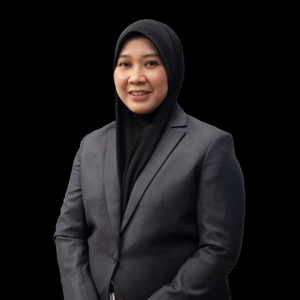
Rashidah Yasin Malaysia

Consultant Internal and Respiratory Medicine at Pantai Hospital Melaka. Graduated from University College Dublin in Ireland. Later obtained a Master in Internal Medicine from National University of Malaysia. Then, completed a Fellowship in Respiratory Medicine from Institute of Respiratory Medicine Kuala Lumpur, followed by an additional Fellowship in Sleep Medicine from Chulalongkorn University in Bangkok. Hold an International Sleep Disorder Specialist (WSS) and Registered Polysomnographic Technologist (BRPT). Expert in management of general respiratory diseases along with complex cases of respiratory failure, airway diseases, intensive care and sleep disorders.
Job Title
Consultant in Respiratory and Internal Medicine
Faculty / Department / Division
Medical
Institution / Organisation
Pantai Hospital Melaka

19 November 2026, Thursday

Time Session
08:30
13:00
Naricha Chirakalwasan Chairperson Thailand
Rashidah Yasin Chairperson Malaysia
Function Room 8, Ground Mezzanine Floor

21 November 2026, Saturday

Time Session
11:00
12:30
Allen Widysanto Chairperson Indonesia
Rashidah Yasin Chairperson Malaysia
  • Naricha Chirakalwasan Speaker Thailand
  • Kah-Lin Choo Speaker Singapore
    Toward Personalised Non-PAP Therapy for Obstructive Sleep Apnoea While positive airway pressure (PAP) remains the gold standard treatment for obstructive sleep apnoea (OSA), long-term compliance is frequently limited by patient intolerance. Emerging insights into the pathophysiology of OSA reveal that the condition is not solely driven by anatomical airway collapse; rather, it is governed by four distinct endotypes that include three non-anatomical endotypes such as poor upper airway muscle responsiveness, low respiratory arousal threshold, and high loop gain (ventilatory control instability). This paradigm shift paves the way for precision medicine and targeted, non-PAP therapeutic strategies tailored to individual physiological profiles. This lecture will review recent advances in non-PAP therapeutic modalities mapped to specific OSA endotypes, examine clinical trial evidence, and address current challenges and future directions in clinical phenotyping and personalized care. Strategies include anti-obesity interventions such as dual GIP/GLP-1 receptor agonists and structural stabilization through hypoglossal or ansa cervicalis nerve stimulation, pharmacological neuromuscular stabilization, loop gain modulation and arousal threshold management. Personalising non-PAP therapy based on individual pathophysiological traits offers a promising paradigm for patients who refuse or are intolerant to PAP. Future clinical success relies on validating automated computational phenotyping tools within routine diagnostic workflows, standardizing prediction thresholds across diverse global populations, and establishing outcome-focused trials linked to hard clinical endpoint.
  • Winfried J. Randerath Speaker Germany
  • Q&A
Ballroom 2, Lower Ground Floor