 APSR2026 logo - v07_final_357389.png)

Winfried J. Randerath Germany
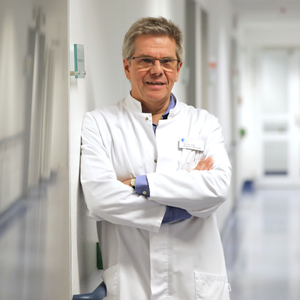
After his medical studies in 1987 at the University of Duesseldorf in Germany, Dr Randerath has entered the field of pneumology with a focus on respiratory and sleep medicine. He holds the position as Medical Director at the Bethanien Hospital, Solingen, Germany, Clinic for Pneumology and Allergology, Center for Sleep Medicine and Respiratory Care as well as the position Director of the Institute of Pneumology at the University of Cologne. He is board certified in Internal Medicine, Pulmonary Disease, Allergology, Environmental Medicine, Palliative Medicine and Sleep Medicine.
He published over 300 hundred national and international papers and is Editor in Chief of Sleep Medicine and Sleep Medicine X as well as Karger Kompass Pneumologie and Associate Editor of Respiration and ERJ open Research. He is a Fellow of the American Thoracic Society, the American Association of Sleep Medicine and the American College of Chest Physicians and was awarded the Teaching Award of the European Respiratory Society and the Meier-Ewert-Price of the German Dental Sleep Medicine Society.
He was Secretary General of the German Respiratory Society from 2018 - 2024 and has served as a board member of the German Society for Sleep Research and Sleep Medicine as well as Chair of the Northern Westphalian Society of Sleep Medicine from 2009 to 2020.
Within ERS he is Guidelines Director for the period 2024 - 2027. He served as Assembly Head of Assembly 4, Sleep Disordered Breathing from 2021 to 2023. Before, he has served as Group Chair of group 4.02 Sleep and Control of Breathing from 2015–2018. He is a member of the ERS Adult Examination Committee since 2019 and served as a member of the ERS Guidelines Committee from 2018 – 2021. He chaired multiple ERS Task Forces: CPAP therapies (started 2022),Technical Standards (Statement finished 2022) non-CPAP therapies (Guideline finished 2021), Sleep and Stroke (Statement finished 2019), Definition, discrimination, diagnosis and treatment of central breathing disturbances during sleep (Statement finished 2016), non-CPAP therapies (Statement finished 2011) HERMES (finished 2014).
Dr Randerath chaired the congress of the German Respiratory Society in 2018, the congress of the German Society for Sleep Research and Sleep Medicine in 2007 and 2014.
His main research activities are: differentiation of obstructive and central sleep apnoea, interaction of sleep apnoea and the heart, pulmonary intensive care, chronic respiratory failure.
Job Title
Director, Institute for Pulmonology
Faculty / Department / Division
Pneumology
Institution / Organisation
University of Cologne
19 November 2026, Thursday
| Time | Session |
|---|---|
|
08:30
13:00
|
Function Room 8, Ground Mezzanine Floor
|
21 November 2026, Saturday
| Time | Session |
|---|---|
|
11:00
12:30
|
Ballroom 2, Lower Ground Floor
|