 APSR2026 logo - v07_final_357389.png)

Amer Siddiq Amer Nordin
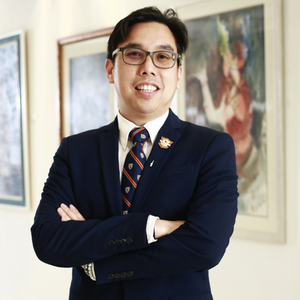
Dr Amer Siddiq Amer Nordin is an Associate Professor in Psychiatry and Consultant Psychiatrist with Universiti Malaya. He was also an Adjunct Professor in Public Health with the Universitas Airlanggar, Surabaya in Indonesia. He obtained his undergraduate and PhD from the University of Otago, New Zealand. He completed his housemanship and psychiatry specialisation in Malaysia, obtaining his Masters in Psychological Medicine from Universiti Malaya. His interests are broad and include mood disorders, early psychosis, obesity, sleep and also tobacco control, in particular smoking cessation.
Dr Amer leads the Nicotine Addiction Research Group of the University Malaya Centre of Addiction Sciences (UMCAS) - NARCC and his research work is primarily in assisting people to quit smoking. His group has successfully won many research grants locally such as theLRGS, FRGS, UM Grand Challenge, UMRG and UM Matching Grant and external grants for their research work. Through his research, his team developed SCOPE training, one of 4 accredited training programs to become a smoking cessation provider in Malaysia. SCOPE training recently adopted a hybrid model of training (digital and face to face) and is now internationally known. To strengthen quit smoking interventions, his team linked with experts in New Zealand and has translated, validated and piloted a Group Based Smoking Cessation training (GBM). His team also developed PROSCite, a tool to evaluate smoking cessation training and recently launched a mobile app to assist people to quit smoking – Getting Everyone to Quit Smoking (GEMPAQ). Other innovations include developing a machine which smokes to spur basic science research in this area in UM. Dr Amer is also the Malaysia lead for international collaborations in this area namely the International Tobacco Control Study (ITC) which is a research consortium of 26 member countries looking at tobacco control policies globally.
Apart from research and teaching, Dr Amer is in a number of technical working groups in tobacco control and smoking cessation for the Malaysia Ministry of Health and World Health Organization Regional Office. He was also part of the Parliamentarian Select Committee in assisting with the Tobacco Control Bill which was passed in December 2023, incepted in 2024 and enforced in 2025. His team is also very much involved in the Smoke Free Malaysia agenda playing a key role in the mQuit initiative. His team also developed a student based advocacy program – HEBAT, which aims to train young people to become tobacco control advocates and further supporting and encouraging Malaysia to be a smoke free nation via the Generation End Game (GEG) agenda.
Despite his busy schedule, he is still very much active in patient care where he practices in both University Malaya Medical Centre and University Malaya Specialist Center as a psychiatrist apart from his administrative duty as the Director of UMCares, the main central facility in charge of community engagement and sustainability for the whole of the university.
Job Title
Head
Faculty / Department / Division
Department of Psychological Medicine
Institution / Organisation
Faculty of Medicine, Universiti Malaya
19 November 2026, Thursday
| Time | Session |
|---|---|
|
08:30
13:20
|
Function Room 7, Ground Mezzanine Floor
|
21 November 2026, Saturday
| Time | Session |
|---|---|
|
11:00
12:30
|
Ballroom 4, Lower Ground Floor
|