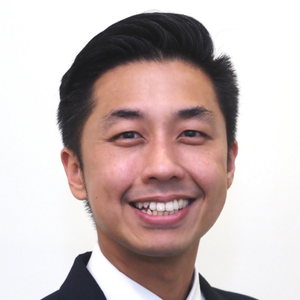
Ser Hon Puah

Ser Hon Puah
Dr. Puah Ser Hon is a Senior Consultant Respiratory Physician and Intensivist working in the Respiratory and Critical Care Medicine Department in Tan Tock Seng Hospital. He is currently the Head of the Respiratory and Critical Care Medicine Department and a member of the Clinical Board of Tan Tock Seng Hospital, Singapore. He started his career as a House Officer in Queen Elizabeth Hospital in Kota Kinabalu, the main city of the state of Sabah in Malaysia in 2004. He subsequently worked in Tawau General Hospital in the town of Tawau, which is also in Sabah, and eventually went back to Queen Elizabeth Hospital under the Ministry of Health, Malaysia. He joined Tan Tock Seng Hospital in 2011 and was trained both in Respiratory and Intensive Care Medicine. He is also an Adjunct Associate Professor in Lee Kong Chian School of Medicine and a Clinical Assistant Professor for Yong Loo Lin School of Medicine from the National University of Singapore. He was the former Programme Director for the National Health Group Respiratory Medicine Residency Programme and Clinical Director for the Respiratory Therapist services in Tan Tock Seng Hospital. His field of interest includes obstructive airway diseases, bronchiectasis and acute respiratory distress syndrome. He is a keen educator and enjoys teaching. He regularly conducts lectures and bedside tutorials for Residents and non-Resident Medical Officers, at the Yong Loo Lin School of Medicine and Lee Kong Chian School of Medicine. He is proficient in English, Malay and Mandarin.
Job Title
Head and Senior Consultant, Department of Respiratory and Critical Care Medicine
Faculty / Department / Division
Respiratory and Critical Care Medicine
Institution / Organisation
Tan Tock Seng Hospital

19 November 2026, Thursday

Time Session
08:30
13:20
Function Room 7, Ground Mezzanine Floor

21 November 2026, Saturday

Time Session
11:00
12:30
Henry Marshall Chairperson Australia
Ser Hon Puah Chairperson Singapore
  • Coral Gartner Speaker Australia
  • Amer Siddiq Amer Nordin Speaker Malaysia
  • Suthat Rungruanghiranya Speaker Thailand
    "The tobacco industry acts as the primary ""commercial vector"" driving global non-communicable diseases (NCDs), responsible for approximately 8 million deaths annually and an economic burden of $1.5 trillion. Drawing from clinical and public health evidence presented at APSR 2026, this session examines the multi-faceted tactics employed by tobacco corporations to undermine tobacco control policies, manipulate scientific discourse, and delay life-saving regulations across the Asia-Pacific region. Through a strategic ""policy dystopia"" framework, the industry utilizes discursive narratives—such as warning of economic loss, illicit trade, and legal violations—alongside instrumental strategies, including lobbying non-health government ministries and establishing front groups like ENDS Cigarette Smoke Thailand (ECST). Corporate tactics routinely stall legislation, resulting in years of unenforced acts and policy rollbacks in countries such as Papua New Guinea, Myanmar, Lao PDR, Malaysia, Indonesia, and Thailand. Furthermore, the industry exploits public health crises, such as COVID-19, through corporate social responsibility (CSR) initiatives and tobacco-leaf vaccine research to gain unmonitored access to government officials. To distort scientific reality, the industry promotes ""switch vs. quit"" narratives and funds biased research, with 65% of heated tobacco comparisons being industry-affiliated and 100% of biomarker trials carrying a high risk of bias. Simultaneously, corporations target healthcare professionals through sponsored continuing medical education (CME) and infiltrate the pharmaceutical sector—such as acquiring respiratory inhaler manufacturers—creating a profound ethical conflict by profiting concurrently from tobacco-caused diseases and their treatments. To counter these commercial determinants of health, public health strategies must strictly enforce Article 5.3 of the WHO Framework Convention on Tobacco Control (FCTC) across the whole of government. Comprehensive defense requires enforcing zero-conflict policies, complete transparency, binding codes of conduct, and restricted official interaction. Ultimately, health authorities should adopt the **TARGET** roadmap—focusing on Tobacco endgame, Accelerating MPOWER, Reducing nicotine levels, Generation nicotine-free policies, Eliminating interference, and Tobacco industry denormalization—to isolate the vector and safeguard public health."
  • Q&A
Ballroom 4, Lower Ground Floor